In a continuation of a 30+ year tradition, we will be gathering in the old growth conifer forests of the PNW to inspire each other and sharpen the tools that allow us to collectively resist environmental destruction.
As we face down worsening ecological collapse, authoritarianism, surveillance and repression, we invite everyone who loves the wild to gather, connect, learn and discuss what is to be done. This will be a week of workshops, conversations and revelry that will hopefully bring you closer to the people and skills needed to fight empire and ecocide in your home.
This fundraiser is intended to support the travel needs of BIPOC attendees/presenters who wish to have agency within the gathering but otherwise would not without this support.
Gatherings run on shoe string budgets and food stamps, which are facing significant cuts. Please support EF! and the direct action community. CEOs and earth destroyers don’t want you to do that.
Ensuring that BIPOC frontline community can deepen personal ties within a vastly wide network of environmental activists means we are weaving the web that is holding us together despite and in defiance of the ongoing desecration of our sacred earth.
Funds raised here will primarily go toward those ends. If enough is raised, any extra will help with the logistical needs of putting on the gathering.
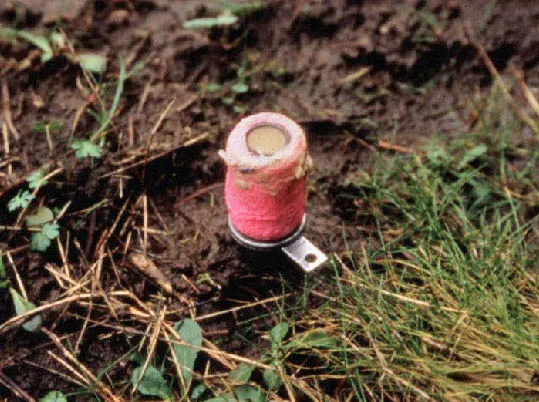
A cyanide bomb. Photo Credit: Brooks Fahy, from publicdomain.media/p/trump-blm-cyanide-bombs-wildlife-services
The Trump administration is lifting a ban on the use of “cyanide bombs” on public lands, reversing course over the objections of environmentalists and animal-rights activists.
The Bureau of Land Management will once again allow the use of the devices, which are spring-loaded traps intended to kill coyotes, foxes and other animals that prey on livestock, according to an internal April memorandum reviewed by The New York Times.
The Biden administration had banned the devices in 2023, saying they were too dangerous to people and wildlife. Public Domain, a Substack newsletter focused on public lands, first reported on the internal April memo.
Cyanide bombs, also known as M-44 devices, spray a lethal dose of sodium cyanide, a highly toxic pesticide, when triggered by a biting animal. They are meant to kill predators that threaten cattle, sheep, goats and other livestock on farms and ranches across the West.
But the devices can also kill or injure people, pets and endangered species. In one 2017 incident that gained national notoriety, the 14-year-old Canyon Mansfield and his dog were sprayed by a cyanide bomb near their Idaho home. The dog, Kasey, collapsed and died. Canyon was rushed to a hospital, where he was treated for temporary blindness.
Alyse Sharpe, a spokeswoman for the Interior Department, which includes the Bureau of Land Management, said in an email that the memo classified M-44s “as tools that may be considered under existing law and environmental review.”
The memo “does not itself authorize or expand use of M‑44s,” she added. “B.L.M. will continue to evaluate proposals case‑by‑case and may prohibit or restrict such tools where warranted to protect public safety, pets, wildlife and designated lands.”
The B.L.M. oversees roughly 245 million acres of public lands. Environmentalists and animal-rights activists sharply criticized the move.
“This dangerous reversal will result in so many indiscriminate killings of pets, endangered wildlife and even people,” said Collette Adkins, who leads the carnivore conservation program at the Center for Biological Diversity, an environmental group.
Wildlife Services, a division of the U.S. Department of Agriculture, has relied on cyanide bombs for farming since the mid-1970s. So have state counterpart agencies in Montana, New Mexico, South Dakota, Texas and Wyoming.
The devices are smeared with scented bait that causes predators to bite them. A capsule containing sodium cyanide is then ejected into the predator’s mouth, killing it within one to five minutes.
In 2019, during President Trump’s first term, the Environmental Protection Agency re-evaluated the use of sodium cyanide in M-44s. The agency ultimately reauthorized its use while instituting new requirements that it said would better protect the public.
Under these requirements, cyanide bombs must be placed more than 600 feet from homes and more than 300 feet from public roads. And they must be accompanied by warning signs in English and Spanish.
In 2023, under the Biden administration, the B.L.M. prohibited Wildlife Services from deploying M-44s on public lands at all, saying it remained concerned about their safety. Nada Wolff Culver, who served as a senior B.L.M. official at the time, said it was disappointing to see the Trump administration change course.
“There is no hiding the risk they are putting on the users of public lands,” she said.
Despite the reversal at the federal level, several states have banned or limited the use of cyanide bombs, including California, Idaho, Oregon and Washington. But the devices are still used to kill thousands of predators each year.
For instance, cyanide bombs killed more than 4,400 coyotes in 2024, the latest year for which data is available, according to Wildlife Services.